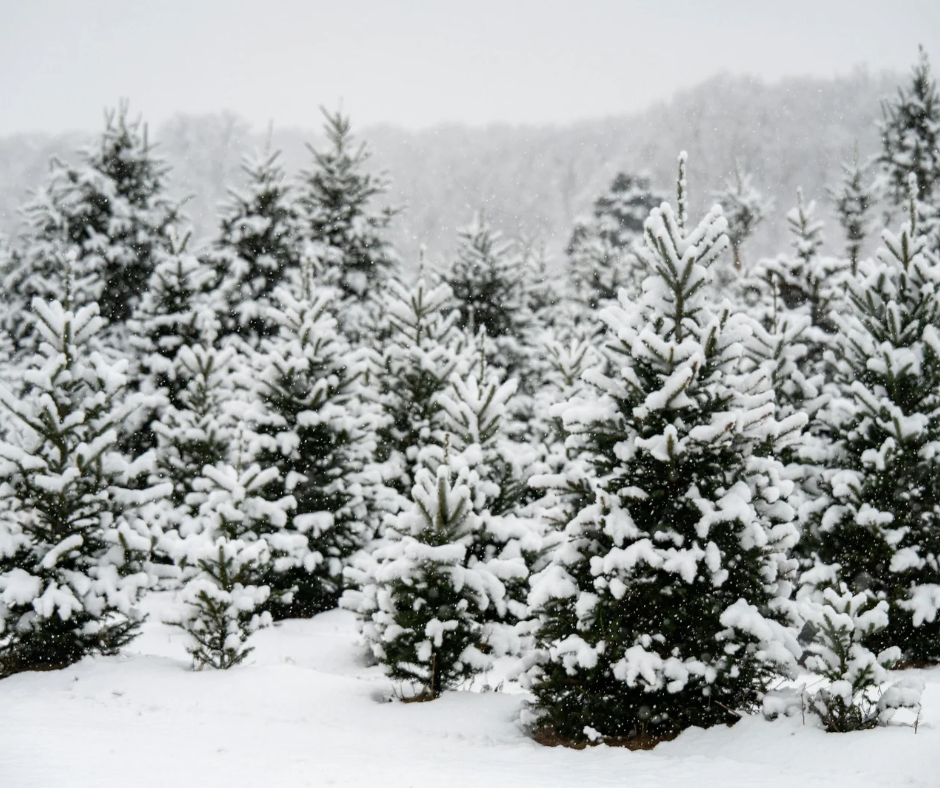
In recent years, I have found myself reflecting on our tendency to approach winter with the same pace and expectations we carry into every other season.
The trees have surrendered their leaves, the fields have grown quiet, the days have shortened, and much of creation has settled into a season of rest. Yet we, who are just as much a part of God’s creation as the trees and the fields, seem determined to carry on as though nothing has changed. We rise with the same expectations, fill our calendars with the same obligations, and measure our days by the same standards of productivity that governed us in the warmth and abundance of summer. We have somehow convinced ourselves that a change in season should require no change in pace.
But perhaps creation knows something we have forgotten.
In Ecclesiastes 3:1, we are reminded, “To every thing there is a season, and a time to every purpose under the heaven.”
These words are so familiar that we may overlook their rather extraordinary meaning. God, who is Himself unchanging, has created a world that is continually changing. He established the seasons, the rhythms of light and darkness, the cycles of growth and dormancy, and the natural patterns of work and rest. And in His infinite wisdom, He did not design creation to remain in a perpetual state of flourishing. Even the most fruitful tree must experience a season in which it bears nothing at all.
We live in an age that has made it easy to ignore the seasons. Artificial light allows us to extend our days well beyond sunset. Modern conveniences permit us to work, travel, shop, and entertain ourselves with little regard for the weather outside our windows. And while these advancements are certainly blessings in many respects, they have also made it possible to live almost entirely disconnected from the natural rhythms God established. We have gained the ability to do more, but perhaps we have lost some of the wisdom to know when less is enough.
In the busyness of modern life, we have often come to mistake constant activity for a measure of our faithfulness. We assume that a full calendar reflects a full life, that productivity is evidence of purpose, and that rest must somehow be earned. Yet Scripture presents a different picture. God Himself established rest within the pattern of creation – not because He was weary, but because rest was good. Jesus, even in the midst of His earthly ministry, withdrew to quiet places to pray. Throughout Scripture, we are reminded that waiting, stillness, and trust are not interruptions to a faithful life. They are often essential parts of it.
For much of human history, winter demanded a different rhythm of life. In many early Christian communities, particularly those shaped by agricultural life and the colder climates of Europe, the fields required less tending, travel became more difficult, and families spent longer evenings gathered around the warmth of their homes. There was time for storytelling, prayer, fellowship, and reflection. Winter was not without its hardships, nor was it a season entirely free from labor. But it was a season that required people to acknowledge their dependence upon God’s provision and to trust that the earth, though seemingly barren, would one day awaken again.
How much peace might we discover if we learned to welcome winter instead of resisting it? Psalm 1:1-3 beautifully states, “Blessed is the one who does not walk in step with the wicked or stand in the way that sinners take or sit in the company of mockers, but whose delight is in the law of the Lord, and who meditates on his law day and night. That person is like a tree planted by streams of water, which yields its fruit in season and whose leaf does not wither – whatever they do prospers.”
Scripture does not tell us that the tree bears fruit continually, nor that its faithfulness is measured by an uninterrupted harvest. Rather, its fruit comes in the season appointed for it. Its strength is not found in constant production, but in the source from which it draws its nourishment. Likewise, God’s children were never intended to flourish in precisely the same way throughout every season of life. There are times for growth and times for gathering, times for labor and times for rest. And in each of them, our calling remains the same: to stay rooted in the Lord, trusting that He knows not only what we need, but when we need it.
A season without visible fruit is not necessarily a season without purpose. Sometimes the most important growth takes place where no one else can see it. Psalm 1 reminds us that the one who abides by God’s seasons is blessed.
As we approach the winter months and prepare our hearts for Christmas, may we consider a different kind of preparation. Not simply preparing our homes for guests or our tables for gatherings, but preparing our hearts to receive the gifts of this season. We might choose to simplify where we can, to be more generous with our attention, to care more intentionally for our bodies, and to make room for prayer, reflection, and fellowship. We might learn to regard a quiet evening not as an opportunity wasted, but as a gift received.
And perhaps, when spring eventually comes, we will discover that winter has given us something we could not have gained by rushing through it.
This winter, when the world urges us to keep moving, producing, and accomplishing at the same relentless pace, may we remember the quiet testimony of creation. May we allow the shorter days to remind us of our need for rest, the bare branches to remind us of the unseen work of God, and the warmth of our homes and loved ones to remind us of His abundant provision. For perhaps a winter well lived is not one in which we have accomplished the most, but one in which we have learned to trust more deeply, love more generously, notice more carefully, and rest more fully in the goodness of God.
And as we celebrate the birth of Christ, may we resist the temptation to become so occupied with the season that we overlook the Savior.
There is a season for everything. And there is grace to be found in receiving the season we have been given.