As children, the weeks between Thanksgiving and Christmas seemed to stretch endlessly before us, filled with anticipation, wonder, and the promise of something extraordinary.
Now, as adults, those same weeks seem to disappear almost as quickly as they arrive. One moment, we are pulling autumn decorations from the basement, and the next, we are packing away the ornaments and wondering how another Christmas has come and gone. The calendar has not changed. There are still twenty-four hours in a day, and December has no fewer days than it did when we were children. Yet somehow, the season that once felt so wonderfully long now seems impossibly short.
I have often wondered whether it is truly time that has changed, or whether it is something within us.
I remember the Thanksgivings of my childhood. I remember the crisp November air, the particular smell of autumn, and the freedom of playing outside while the adults gathered indoors, preparing food and enjoying conversation. I remember the excitement of visiting shopping malls dressed in their Christmas finest, the lights, the music, the elaborate decorations, and the tremendous importance of selecting just the right gifts for family and friends. There was something magical about it all, although I doubt I could have explained exactly what made it so. We attended holiday programs, sang familiar songs, visited relatives, and participated in traditions that returned year after year. And somehow, despite their repetition, they never seemed ordinary.
Now, many years later, I find myself participating in similar traditions, only from the other side of the experience. Instead of being the child performing in the Christmas program, I am the parent making sure everyone arrives on time, wearing the appropriate clothing, with whatever supplies or contributions were requested. Instead of wandering through decorated stores with wide-eyed excitement, I am navigating shopping lists, budgets, and deadlines. Instead of simply arriving at a Thanksgiving gathering, I am thinking about what needs to be prepared, what needs to be purchased, and whether there will be enough time to accomplish it all.
The traditions themselves have not necessarily lost their beauty. But somewhere along the way, I fear I have occasionally lost my ability to see it.
There is a danger in familiarity that we seldom recognize until it has already taken hold. The extraordinary, when encountered often enough, can begin to appear ordinary. A beautiful piece of music becomes background noise. A meaningful tradition becomes another appointment. A gathering of loved ones becomes something we must somehow fit into an already crowded schedule. Even the most sacred occasions can gradually become reduced to a series of tasks to be completed.
And perhaps that is one of the great ironies of adulthood. We work so diligently to recreate the magic of the holidays for those we love that we sometimes forget to experience it ourselves.
We decorate the house but scarcely pause to enjoy its warmth. We prepare elaborate meals but rush through the gathering. We attend Christmas services while mentally reviewing the obligations awaiting us afterward. We preserve the outward appearance of celebration while quietly neglecting the inward posture that gives celebration its meaning.
I wonder whether we have confused the preservation of tradition with the preservation of wonder.
Traditions, after all, are not inherently meaningful simply because they are repeated. Their value lies in what they remind us to remember. A Thanksgiving meal is not merely an annual gathering around a table. It is an invitation to recognize the abundance of blessings we have received, including those we have grown so accustomed to that we scarcely notice them. A Christmas program is not simply another performance to attend. It is an opportunity to witness a new generation participating in the telling of an ancient and extraordinary story. Even the simple act of giving a gift can become something sacred when we remember that generosity is an expression of love rather than another obligation to check off a list.
The problem is not necessarily that we do the same things year after year. Maybe the problem is that we have stopped allowing those things to do their intended work within us.
In Christian worship, there is a concept known as liturgy, a pattern of repeated practices that helps direct our hearts and minds toward God. At its best, liturgy reminds us that repetition need not diminish meaning. In fact, repetition can deepen it. We return to the same Scriptures, the same prayers, and the same sacred observances not because there is nothing new to discover, but because there is always something more to understand.
Perhaps our holiday traditions should function in much the same way.
Thanksgiving should be more than a hurried prayer before an abundant meal. As a follower of Christ, I do not want to offer God a few obligatory words of gratitude before returning my attention to the food, festivities, and football. I want to genuinely consider the goodness of God in my life. I want to remember the prayers He answered, the difficulties He carried me through, the people He placed in my path, and even the disappointments through which He quietly worked for my good. I want to be grateful not merely for what I have received, but for the One from whom every good gift comes.
Gratitude, I suspect, requires more than acknowledgment. It requires attention.
And attention is precisely what our hurried lives so often refuse to give.
Then comes December, with its dazzling lights, familiar melodies, crowded calendars, and endless opportunities for celebration. And while I genuinely enjoy so much of what accompanies the Christmas season, I am increasingly aware of how easily the celebration of Christ’s coming can distract us from contemplating the significance of His arrival.
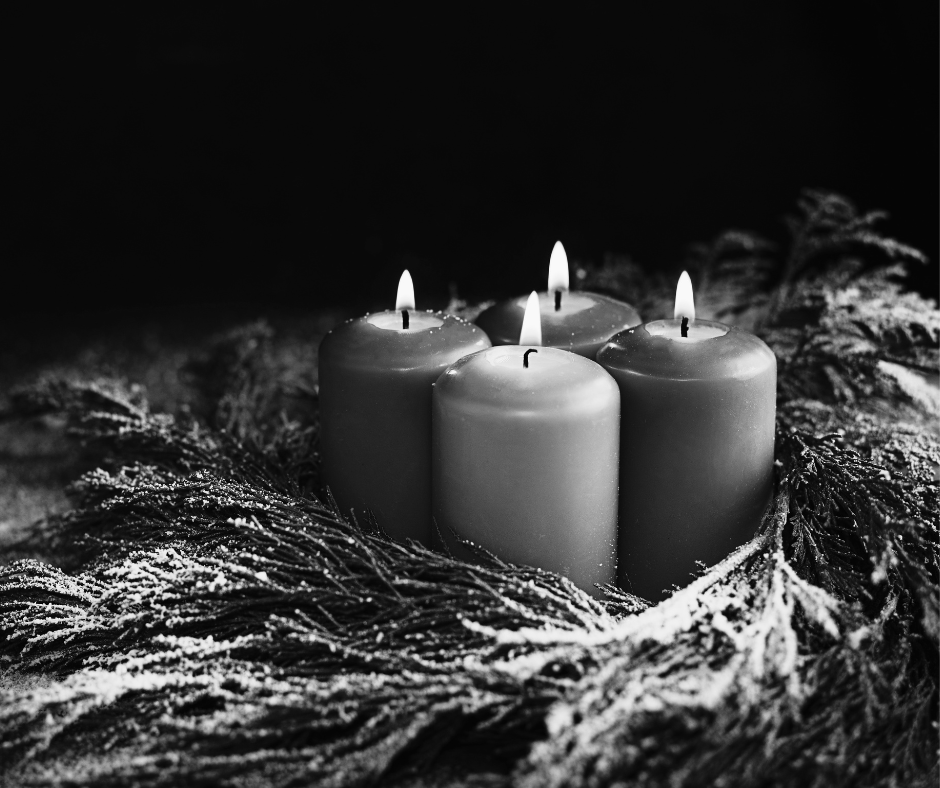
The word Advent comes from the Latin adventus, meaning “coming” or “arrival.” In the Christian tradition, Advent is a season of anticipation, a time to remember Christ’s first coming while looking forward to His promised return. It is a season suspended between two extraordinary moments in human history: the arrival of our Savior in humility and the future return of our King in glory.
How extraordinary that we can become so accustomed to a story of such magnitude that we sometimes reduce it to decorations, greeting cards, and familiar songs.
I do not say this to diminish the joy of Christmas traditions. Quite the opposite. I believe our celebrations should be filled with joy precisely because of what we are celebrating. The laughter around the table, the excitement of children, the beauty of music, the generosity of giving, and the warmth of gathering together are not distractions from the sacred when they are received with the right perspective. They can become beautiful reminders of it.
But we must be careful not to mistake the symbols for the substance.
A candle is not the light of Christ, but it can remind us of Him. A gift beneath the tree is not the gift of salvation, but it can point us toward the generosity of God. A gathering of family and friends cannot satisfy the deepest longings of the human heart, but it can offer us a small glimpse of the fellowship for which we were created.
Maybe the answer is not to abandon our traditions, but to approach them differently.
Before the Thanksgiving meal, we might sit quietly and consider what the Lord has done over the past year, not only the obvious blessings, but the mercies that arrived disguised as interruptions, closed doors, and unexpected changes. Before attending another Christmas program, perhaps we might remember what a privilege it is to watch children joyfully proclaim a story that has been told for more than two thousand years. Before filling every available evening in December, perhaps we might ask whether our calendars reflect what we say we value.
And before Christmas morning arrives, perhaps we might spend a little more time contemplating the astonishing truth that God came near.
This year, before the holidays slip away, I want to resist the temptation to merely move through them. I want to be present for the laughter, the conversations, the music, the worship, and even the quiet moments in between. I want to remember that Thanksgiving is not simply a day set aside for gratitude, but an invitation to cultivate a grateful heart. I want to remember that Christmas is not merely the commemoration of a beautiful event in history, but the celebration of a living Savior and the anticipation of a coming King.
I want to approach the familiar with fresh eyes, the ordinary with renewed appreciation, and the sacred with the reverence it deserves.
Because the magic I remember from childhood was never really found in the decorations, the shopping malls, or the holiday performances. Those things simply provided a setting in which wonder was easier to recognize.
And, with a little more intention, prayer, and attention, that wonder is not nearly as far away as it sometimes seems.
The holidays will come and go, as they always do. The calendar will turn, the decorations will return to their boxes, and another year will begin.
But I pray that when this season has passed, I will have done more than simply celebrate it.
I pray that I will have allowed it to change me.