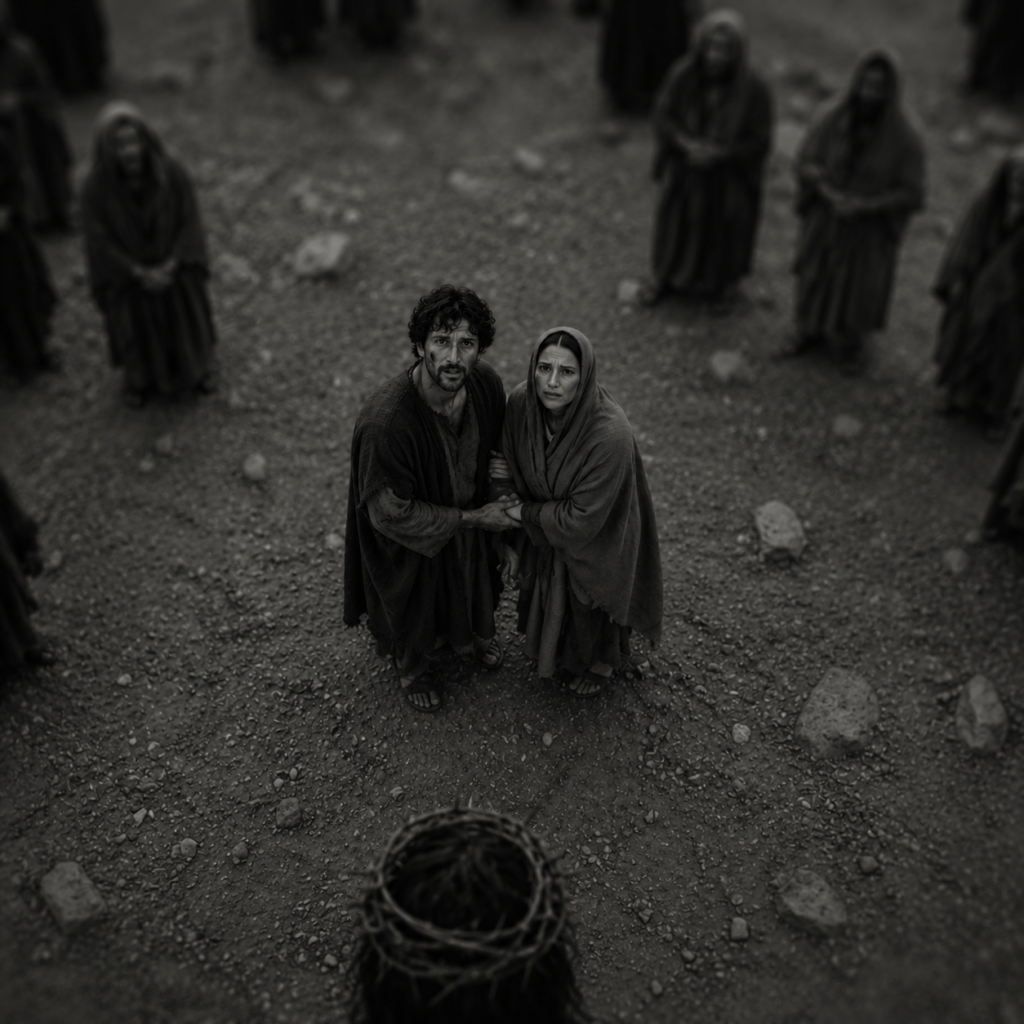
There is something profoundly tender about the scene at Calvary that we often rush past too quickly. The Son of God hangs suspended between heaven and earth, bearing the unbearable weight of sin and sorrow. Around the cross swirl mockery, grief, confusion, and fear. Yet Jesus notices something painfully human:
His mother is standing there. And beside her stands John.
The Gospel of John records the moment with remarkable simplicity:
“When Jesus saw his mother there, and the disciple whom he loved standing nearby, he said to her, ‘Woman, here is your son,’ and to the disciple, ‘Here is your mother.’ From that time on, this disciple took her into his home.” (John 19:26–27)
Even while bearing the sins of the world, Christ ensured His earthly mother would not be left alone.
It is difficult to imagine a more moving picture of honor. Jesus did not cast aside earthly relationships in pursuit of spiritual things, as though love for family were somehow beneath holiness. The Scriptures consistently call us to honor father and mother, to care for widows, to provide for relatives, and to live faithfully within the households God has given us.
And yet there is another layer to this moment that should not escape us.
Mary had other sons.
James. Jude. Brothers who would later become pillars of the early Church and authors of Scripture itself. But at this moment in history, many scholars believe these brothers had not yet fully believed Jesus was the Messiah. The resurrection had not yet shattered their unbelief into faith.
So Jesus entrusts His mother, not to a biological brother, but to a spiritual brother.
Not to shared blood, but to shared belief.
There, at the foot of the cross, Christ quietly reveals something the Church would spend centuries learning: spiritual kinship is not secondary in the Kingdom of God. In many ways, it is eternal family.
We live in an age that idolizes either autonomy or ancestry. Some worship independence. Others cling so tightly to bloodlines that they treat biological connection as the highest possible loyalty. But the Gospel complicates both instincts.
Jesus never diminished the importance of earthly family. Yet He repeatedly taught that the family formed through obedience to God was mysteriously deeper still.
“Who is my mother, and who are my brothers?” He once asked. Then, stretching out His hand toward His disciples, He answered: “Here are my mother and my brothers. For whoever does the will of my Father in heaven is my brother and sister and mother.”
What astonishing words.
The Church is not merely a gathering of like-minded people. It is not a social club held together by common interests and events. It is a covenant family formed by the blood of Christ Himself.
Perhaps this is why the old phrase resonates so deeply: the blood of the covenant is thicker than the water of the womb.
Though often quoted imperfectly, the sentiment captures a profound biblical truth. There are bonds forged in shared surrender to Christ that become stronger than mere biology ever could. The prayers whispered together. The burdens carried together. The suffering endured together. The communion shared at the Lord’s Table. These things knit souls together with heavenly thread.
Many believers know this intimately.
Some have been abandoned by biological family because of faith. Others sit in pews beside elderly widows who have become grandmothers in every way except DNA. Some find spiritual fathers and mothers in mentors who taught them how to walk with God when their earthly homes never did. Some discover brothers and sisters in Christ who arrive with meals during tragedy, prayers in sickness, and steadfast love.
The Church becomes family because Christ intended it to be so.
And perhaps nowhere is this more beautifully seen than at the cross itself.
In His final earthly moments, Jesus was not merely ensuring Mary had a place to live. He was demonstrating the shape of the Kingdom He came to establish. A Kingdom where love is deeper than genetics. Where covenant surpasses convenience. Where believers belong to one another in a way the modern world scarcely understands anymore.
Scripture does not give us permission to neglect our earthly families, but it does remind us that when Christ calls people together, He creates something stronger than shared ancestry alone.
A spiritual household.
An eternal family.
And there beneath the cross, Jesus quietly placed His mother into the arms of the Church.