“Let us throw off everything that hinders and the sin that so easily entangles. And let us run with perseverance the race marked out for us.” – Hebrews 12:1
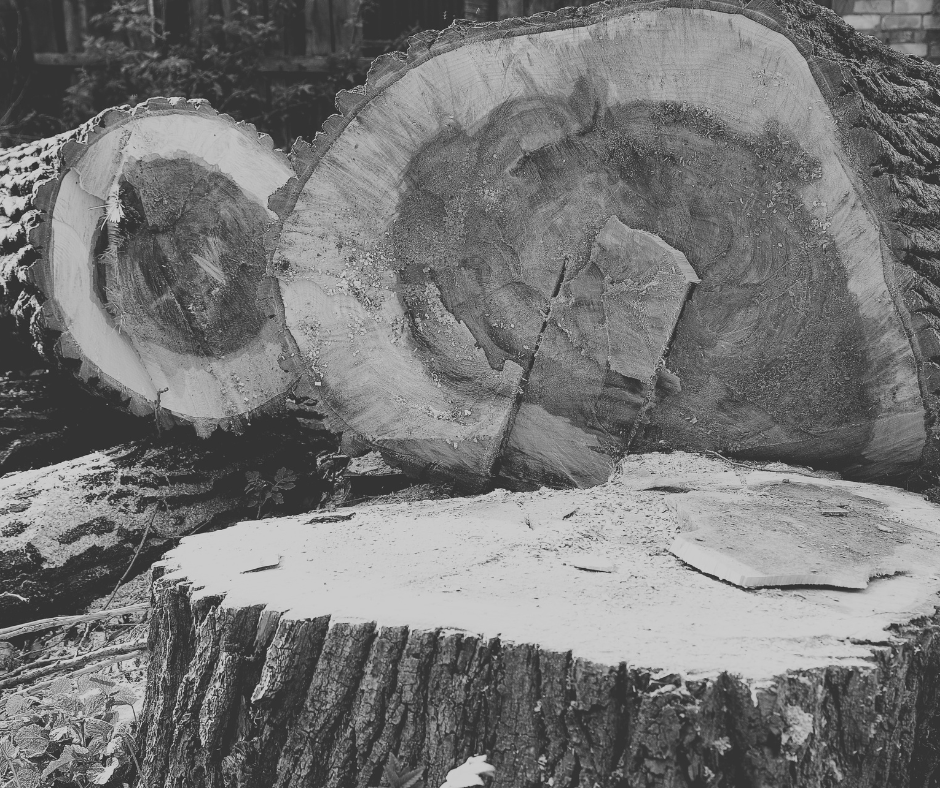
Recently, we had two large trees removed from our front yard. They had been there for decades, long before our family arrived, and there was much to love about them. They were beautiful. They gave shade. They had become part of the familiar landscape of home.
Unfortunately, they had also become dangerous.
One stood close enough to a power line that the next severe storm might have turned it from shelter into destruction. The roots of the other had begun creeping dangerously close to our basement foundation. After consulting professionals, the verdict was rather simple: the trees needed to come down.
Our teenage son was heartbroken. He is sentimental by nature and attaches memories to things. To him, removing the trees felt somehow like removing part of the life that had happened beneath them.
We could explain the danger. He could understand the reasoning. But the heart is not always persuaded by the same evidence that persuades the mind.
As I watched the branches come down, I began to wonder whether we are very different when God asks the same of us.
The writer of Hebrews tells us to “throw off everything that hinders and the sin that so easily entangles.” It is worth noticing that he mentions both. Apparently, not everything that hinders us is necessarily sinful. Some things are simply too heavy to carry where God is taking us.
We tend to imagine that if God asks us to surrender something, there must have been something wrong with it. The difficulty was not what the trees were or had been, but what they were becoming.
Perhaps the same is true of certain things we refuse to release.
A relationship may be familiar but no longer fruitful. A career may be secure while quietly consuming us. A habit may comfort us while slowly gaining mastery over us. Even something that once belonged quite beautifully in our lives may eventually become a weight.
And this is where surrender becomes difficult.
We remember the shade while God can see the roots.
We judge a thing largely by what it has given us. God also knows what it may eventually cost us.
Familiarity has a peculiar ability to disguise danger. We can become so accustomed to carrying something that we cease to notice its weight.
Hebrews gives us the image of a runner, and runners understand something sentimental people often resist: you cannot carry everything with you simply because it once mattered. If you intend to finish the race, some things must be laid aside.
Perhaps this is why surrender can feel so much like loss. God sees the road ahead while we are still looking backward at what we have known.
Eventually, the trees came down, and the yard looked strangely empty. Their absence was immediately noticeable. Yet the house was safer, the foundation was protected, and the memories had not disappeared with the trees.
That may be one of the quieter lessons of surrender.
Letting go of something does not mean it never mattered. It does not make the years wasted or the memories less precious. It simply acknowledges that something can have been good for a season without being good forever.
There are times when faith asks us to plant. There are times when it asks us to wait. And there are times when faith simply asks us to loosen our grip.
We see the shade.
God sees the roots.
And perhaps trust is believing that when He tells us something must come down, He can see what we cannot.