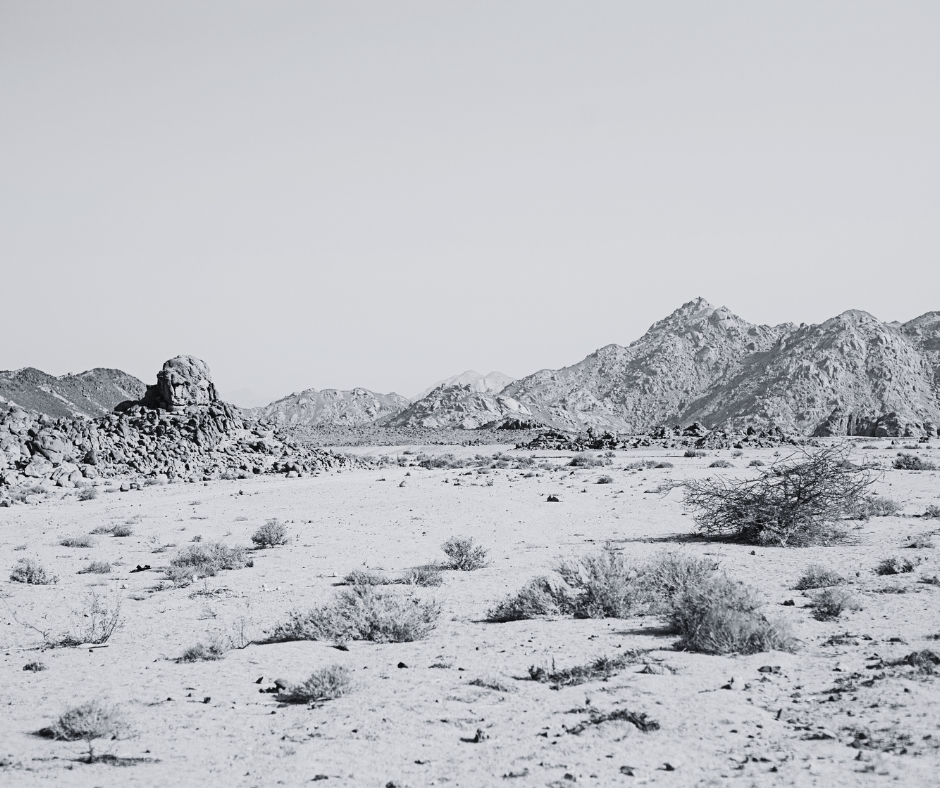
It is remarkably easy to be annoyed with the Israelites. We read their story from the comfort of knowing how it ends. We know the sea will part. We know manna will fall. We know water will come from the rock. We know the Promised Land is real. And so, when they complain, we shake our heads. How could they possibly doubt God after everything they had seen? They watched the plagues fall upon Egypt while God preserved His people. They walked out of slavery and stood at the edge of an impossible sea with an army closing in behind them. Then they watched God make a road where no road existed. They walked through the Red Sea on dry ground.
And then they complained about dinner.
It seems almost absurd until we realize how often we do exactly the same thing.
The Israelites had been freed from bondage, but freedom did not immediately feel like freedom. Egypt was cruel, but Egypt was familiar. There were schedules in Egypt. There were meals in Egypt. There were structures and expectations. They knew what tomorrow would probably look like, even if tomorrow meant another day of slavery. The wilderness offered something entirely different: freedom accompanied by dependence. They could no longer depend upon Pharaoh’s system to tell them where they would sleep, what they would do, or where their food would come from. Every morning required them to look toward Heaven.
We tend to imagine freedom as the removal of difficulty. God sometimes defines freedom as the removal of everything we trusted more than Him.
When Christ frees us, He does not necessarily lead us immediately into a life of ease, certainty, abundance, or predictability. Sometimes He leads us directly into a wilderness where the old chains are gone, but the Promised Land is not yet visible. Somewhere between what was and what will be, we discover what we actually believe about God.
When circumstances became difficult, the Israelites began remembering Egypt rather selectively. They remembered the food but forgot the chains. They remembered what had been predictable and began romanticizing what had once enslaved them. We do this too. There are things God has delivered us from that occasionally begin looking attractive again when obedience becomes uncomfortable: old habits, old relationships, old ambitions, old identities, old ways of coping, old ways of measuring success. We may never say, “I want to return to slavery.” We simply begin wondering whether life was easier before we started taking God quite so seriously.
That is one of the peculiar things about bondage. Once enough distance separates us from it, we can remember its comforts while forgetting its chains.
Then there was manna. God provided food for His people every day. Not every month. Not a year’s supply conveniently delivered to their tents. Daily bread. Enough for today. There was something almost deliberately inconvenient about it because they had to wake up tomorrow and trust Him again. God could have given them warehouses of manna. He could have handed Moses a detailed itinerary with dates, destinations, expected difficulties, and an estimated arrival time. Instead, He gave them what they needed when they needed it.
And again, we are tempted to judge them until we consider how often we ask God for the warehouse.
We want provision, but preferably enough provision to eliminate the need for tomorrow’s faith. We want God to show us the path, but what we often mean is that we want Him to show us the entire map. We want enough money to know we will be secure, enough information to know the decision will work, and enough confirmation to remove the need for trust.
Yet Scripture tells us, “Your word is a lamp to my feet and a light to my path.” A lamp is not a floodlight. It does not illuminate the entire road. It gives enough light for the next step. Then another. And another. Perhaps we spend far too much time asking God to illuminate mile twenty when He is patiently illuminating step two.
This kind of dependence can feel especially foreign in our modern world. We have become exceptionally good at creating the illusion that we do not need daily bread. Technology anticipates our questions. A small device in our hands can tell us where we are, where we are going, how long it will take to arrive, what the weather will be, and which road contains the least traffic. Modern medicine can repair bodies in ways that would have seemed miraculous to previous generations. Our homes, machines, conveniences, and endless access to information have made life faster, easier, and more predictable.
These things are not inherently bad. Many are extraordinary gifts. But convenience has a spiritual danger: it can quietly teach us that uncertainty is a malfunction.
We begin to believe that if we cannot predict something, control something, repair something, schedule something, track something, insure something, or understand something, then something has gone terribly wrong. Then we encounter the eternal, omnipotent, omnipresent God, who possesses all the certainty we crave while refusing to hand all of it to us. He asks us instead to trust Him.
Most believers will eventually stand before something that looks very much like a Red Sea. There is no visible road forward. Behind us is something we cannot return to, and before us is something we cannot cross. Then God, in His mercy, sometimes does what only God can do. The provision arrives. The impossible door opens. The answer comes. The relationship is restored. The circumstances shift. Somehow, the thing we could not manufacture, manipulate, or arrange happens.
We stand on the other side amazed. God did it. We thank Him. We tell people about it. We promise ourselves we will never doubt Him again.
And then, astonishingly, we do.
A few miles into the wilderness, we become concerned about water. The God who parted an ocean suddenly seems incapable of handling Tuesday. This is not merely Israel’s story. It is ours. We have remarkably short spiritual memories. We remember our current fear more vividly than God’s previous faithfulness.
Perhaps the saddest part of Israel’s wilderness story is that they wandered while free. Pharaoh no longer owned them. The chains had already been broken. The sea had already closed behind them. Yet Egypt remained alive inside their thinking. They were physically liberated long before they learned how to live as liberated people.
There is something painfully familiar about that. Christ can break our chains while we continue thinking like prisoners. We can be forgiven yet continue living under shame. We can be provided for yet remain consumed by scarcity. We can be loved yet continually seek the approval of others. We can be given peace yet surrender ourselves to anxiety about tomorrow. Sometimes the wilderness is not evidence that God has abandoned us. Sometimes it is the place where He teaches free people how to live free.
The world has its own definition of freedom. It tells us freedom means having enough money that circumstances cannot frighten us, enough options that we never feel trapped, enough information that nothing surprises us, and enough control that very little faith is required. But Christian freedom is stranger. It is the freedom to have very little and still say, God will provide. The freedom to face uncertainty and say, God already knows. The freedom to suffer and still say, God is good. The freedom to stand before an impossible sea and believe that if God wants us on the other side, He can make a road.
God never promised His followers immunity from wildernesses. He promised His presence within them. He never promised that we would understand every chapter. He promised that He would never leave us. He never promised abundance according to the world’s definition. He taught us to pray for daily bread. He never promised a life without sorrow. He promised joy. He never promised circumstances that always make sense. He promised peace that surpasses understanding.
So perhaps we should judge the Israelites a little less harshly. Their story is our story. We too have watched God provide and then wondered whether He will provide again. We too have seen seas part and later panicked over water. We too have complained about manna because we wanted a feast. We too have looked backward at things God freed us from because the familiar sometimes feels safer than faith. We too have mistaken uncertainty for abandonment.
Maybe the wilderness is not merely the inconvenient stretch of land between bondage and blessing. Maybe it is holy ground. Maybe it is where God slowly removes Egypt from us, loosens our grip on certainty, teaches us that enough really can be enough, and proves that His presence is more dependable than our plans.
Perhaps one day we will look back upon the desert and realize that we were never wandering quite as aimlessly as we thought.
We were being led.
The road was simply longer than we expected. The provision came one day at a time. The light fell only a few feet ahead.
But God knew where He was leading us all along.